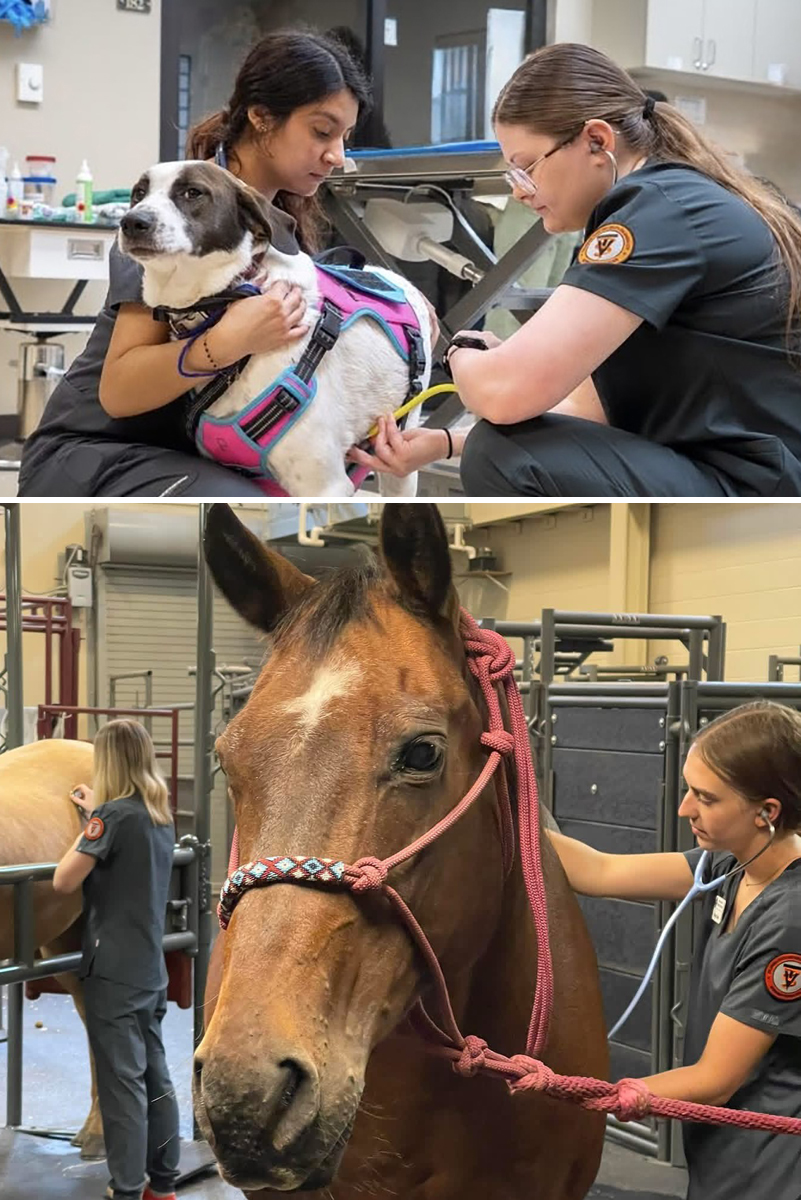
The Veterinary Technology curriculum prepares graduates with entry-level knowledge, technical abilities, and hands-on clinical skills needed to enter the veterinary profession and pursue professional credentialing.
Students develop a strong foundation in veterinary medicine while gaining experience with multiple species and areas of practice. The curriculum prepares graduates to:
* Provide safe, compassionate nursing care for veterinary patients.
* Perform clinical laboratory and diagnostic procedures.
* Assist with anesthesia, surgery, dentistry, diagnostic imaging, and emergency care.
* Safely handle and care for companion animals, equine patients, and food animals.
* Understand veterinary pharmacology and safely administer medications.
* Communicate effectively with veterinarians, veterinary team members, and clients.
* Apply professional, ethical, and evidence-based standards to veterinary patient care.
* Develop entry-level skills applicable to companion animal, equine, and food animal practice, biomedical research, and other veterinary medical activities.
* Build the educational foundation necessary to successfully become credentialed as a veterinary technician.
* Recognize the importance of lifelong learning and continued professional development throughout their veterinary career.